
Welcome to AMKNWorld and Happy Reading
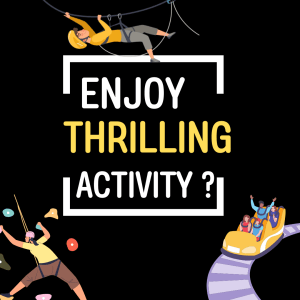
When we were kids, not many parents let us watch scary movies or do activities that made us scared. Although we are never encouraged to watch horror films, our curiosity about them grows as we get older. Whether it’s due to internal interest, joining in with friends, not wanting to lose or even don’t want to be perceived as weak by our peers.
Fear develops as we grow older and have more experiences, whether it is impacted by our inner-self or painful situations, or we observe other people have a particular fear, causing us to generate that fear.
Do people consider fear to be a positive trait? Nobody seems to think of it that way. Some will believe fear is a beneficial trait, but I believe the number is not greater than those who think it is a negative trait. Whether you consider it positive or negative, neither is wholly incorrect. Why? Because, despite its appearance, fear has a good aspect.
Our bodies usually prepare us to go into defensive or survival mode in dangerous situations. This will shape our response to a situation, and how our brain and body work will differ from when we are in normal mode. By allocating and storing enough energy to prevent or lessen physical discomfort, we will activate the systems that will help us survive. If our body starts this system, it will turn off parts of the body’s or brain’s less essential systems. Because our brains have been designed to provide us a signal to enter a safe state.
I’ll categorize the fear into two types:
Safe fright
Your brain communicates that your fear isn’t real (haunted house, watching horror movies, bungee jumping, shark cage experience). They can all scare you, but they were all made by humans, and you already know the outcome. Even if you know what you are afraid of is untrue, you really feel scared (temporary fear), but the sense of accomplishment feels natural. These are referred to as evolutionary adaptations.
Self-scaring is not for everyone. Some people are afraid of the unknown, while others welcome it. Adrenaline, endorphins, and dopamine rushes can make you happy (euphoria), scared yet delighted.
Dangerous Fright
Fear of the unexpected makes it difficult to find a solution. This is the polar opposite of thrilling activity.
As an example:
- You are in the woods and come across a wild beast.
- The ship you’re on is steadily sinking.
- You’re lost in the unknown.
- You’re imprisoned somewhere.
What Are the Advantages of Fear?
- Feel relaxing after the adrenaline rush (the brain tells us to relax because we are in an unreal circumstance)
- Feel relaxing after the adrenaline rush (the brain tells us to relax because we are in an unreal circumstance)
- It combines fear and fun, producing the same joy as a 10-mile run.
- It works because those who can enjoy being scared are the first to feel safe.
- Assists in practicing our responses, increasing self-awareness and resilience, and temporarily shutting down specific brain parts, allowing us to forget the stressful experience and unwanted ideas.
- If it is a short-term fear, it assists people in responding appropriately for self-protection and even improves our immune system.
- Recalibrate our emotions, which we don’t regularly put to the test.

Fear is contagious, as are emotions, and fear may bring people together. We mimic our friends when we observe them freely expressing themselves or in a safe fright zone.
Why? We want to know and feel what our friends feel by recreating what they did. This will strengthen the link and emotional experience, bringing us closer together. Many friendships and other relationships are strengthened by engaging in these fun-filled activities. This connection is frequently misconstrued. Many people mistake this for intimacy or love, but what happens is that this bonding experience is generated when we are terrified and can happen to anyone.
Powerful emotions, such as fear, will linger with us for a long time, and the outcome of this intense feeling might have a positive or negative impact, and you will remember it for the rest of your life; this is what we call Flashbulb Memories.
We are born fearless, and our society is the source of our fear. We unconsciously pass on our fear from generation to generation, and it grows. We are terrified whenever we witness unusual objects, such as veiled faces and contorted bodies. Unfamiliarity makes us feel uneasy, and when we disobey natural laws, it might increase our fear.
According to Shelly Taylor, people form extra deep connections when we are thrilled, and as social beings, we require the assistance of others when we are stressed.
So, what about you? Do you enjoy a thrilling activity or hate it?
Regardless of your answer, now you know that fear can also bring positive effects. I hope you find this content helpful or become a new source of information for you.
See you on the following content!
Credits
https://www.youtube.com/watch?v=oetVvR5RQUs
https://www.psychologytoday.com/us/blog/thoughts-thinking/201810/5-reasons-we-enjoy-being-scared
https://www.theatlantic.com/health/archive/2013/10/why-do-some-brains-enjoy-fear/280938/
https://www.medicalnewstoday.com/articles/fear-can-be-fun-and-it-might-even-be-good-for-you
Insecure vector created by storyset – www.freepik.com
 AMKNWORLD
Leave a comment