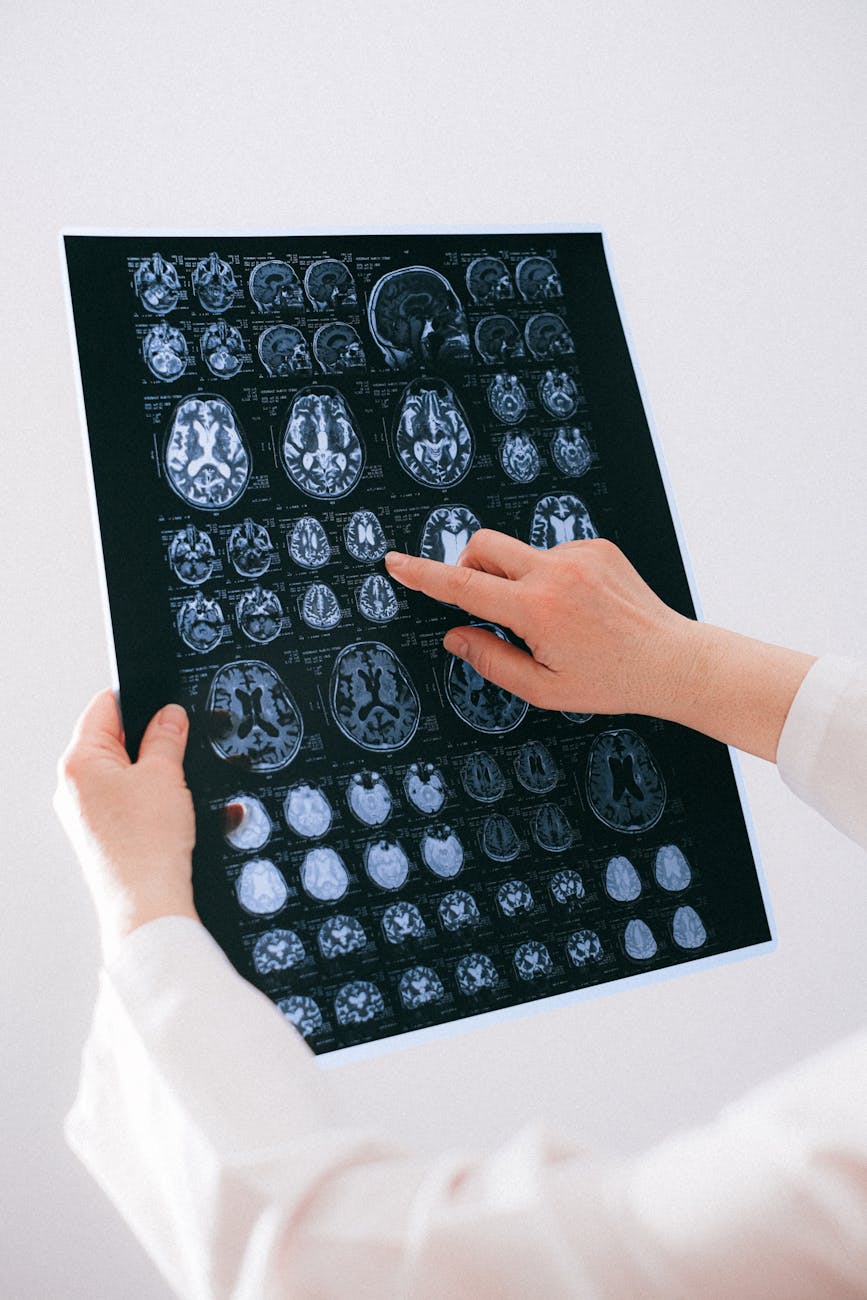
Hey, welcome back to another episode of 1 Minute Content. It’s been a while since we last posted in this series, but I hope this one is worth the wait. In this article, we’re diving into something simple but powerful: how a little movement each week can do wonders for your brain.

Let’s be honest: we usually think of exercise as something we do to look better or stay fit. But here’s something most people don’t realize. Exercise is just as good for your brain as it is for your body. Studies have shown that working out for just 30 minutes per session, about 3 to 4 times a week, can help protect your memory and support long-term brain health.
How? It begins with something called the hippocampus—a small yet powerful part of the brain that plays a crucial role in learning and memory. One of the most well-known studies in this area, led by Erickson et al. (2011), found that adults who followed a regular, moderate-intensity exercise routine for six months actually increased the size of their hippocampus. That’s right, exercise can help stimulate brain growth.
What Does “Moderate Intensity” Actually Feel Like?
According to the Mayo Clinic, moderate-intensity workouts look something like this:
- You’re breathing a little faster, but you can still carry on a conversation
- You start sweating lightly after about 10 minutes
- You can talk easily, but singing? Not happening
Think brisk walking, cycling at a casual pace, dancing, swimming, stair climbing, and even household activities can count as well, which lead you to break out in a light sweat.
7 Ways Exercise Helps Your Brain (and Your Daily Life):
- Lowers Stress and Builds Resilience
Exercise not only helps reduce the amount of cortisol (your primary stress hormone) but also decreases the number of stress receptors in your hippocampus. That means your brain becomes more resilient and less reactive to stressful situations. - Helps Prevent Age-Related Brain Fog
As we grow older, our brain naturally slows down. Regular physical activity helps keep your mind clearer, sharper, and less foggy by encouraging the formation of new neural connections. - Strengthens Learning and Memory Formation
Exercise enhances brain plasticity (the ability to form new neural pathways), making it easier for your brain to absorb new information and store it as long-term memory. - Boosts Circulation and Nutrient Delivery
Moving your body increases blood flow, allowing your brain to receive more oxygen and nutrients. This supports everything from clearer thinking to faster problem-solving. - Lifts Mood, Energy, and Mental Clarity
Every drop of sweat matters. Exercise releases endorphins that naturally boost your mood, raise your energy levels, enhance focus, and leave you feeling mentally refreshed. - Speeds Up Reaction Time
Even one workout can noticeably improve how quickly and accurately your brain processes information and responds to external stimuli. - Slows the Progression of Dementia and Alzheimer’s
While exercise can’t cure these conditions, growing evidence suggests that it strengthens the prefrontal cortex and hippocampus, two areas particularly affected by dementia. The stronger these areas are, the longer it takes for symptoms to set in.
Quick Brain Anatomy 101 (For the Curious Mind)
Let’s break it down simply:
- Prefrontal Cortex: Sits right behind your forehead. It’s your command center—responsible for focus, decision-making, planning, and personality.
- Hippocampus: Tucked inside the temporal lobes (on the sides of your brain). It’s the memory maker, where new long-term memories are formed and stored.
When you exercise, you’re not just getting fit. You’re literally building a stronger foundation for how you think, remember, and process life. You don’t have to go all in. You just have to start. A walk. A dance. A light jog. Just 30 minutes of moderate movement, a few times a week, could help protect your mind for decades. And if you’re ever feeling unmotivated, remember, your future self (and future memories) are counting on you.
References:
- Boere, K., Lloyd, K., Binsted, G., & Krigolson, O. E. (2023). Exercising is good for the brain but exercising outside is potentially better. Scientific Reports, 13(1). https://doi.org/10.1038/s41598-022-26093-2
- McGregor, G. (2021, February 8). How exercise affects the brain. Life Sciences. Retrieved June 11, 2025, from https://lifesciences.byu.edu/how-exercise-affects-your-brain#:~:text=Exercise%20induces%20good%20blood%20flow,to%20brain%20function%2C%20including%20memory.&text=People%20hold%20their%20memories%20dear,a%20fraction%20of%20our%20lives.
- TED. (2018, March 21). Wendy Suzuki: The brain-changing benefits of exercise | TED [Video]. YouTube. https://www.youtube.com/watch?v=BHY0FxzoKZE
- Konopka, L. M. (2015). How exercise influences the brain: a neuroscience perspective. Croatian Medical Journal, 56(2), 169–171. https://doi.org/10.3325/cmj.2015.56.169
- Godman, H. (2014, April 9). Regular exercise changes the brain to improve memory, thinking skills. Harvard Health. https://www.health.harvard.edu/blog/regular-exercise-changes-brain-improve-memory-thinking-skills-201404097110
 AMKNWORLD
Leave a comment