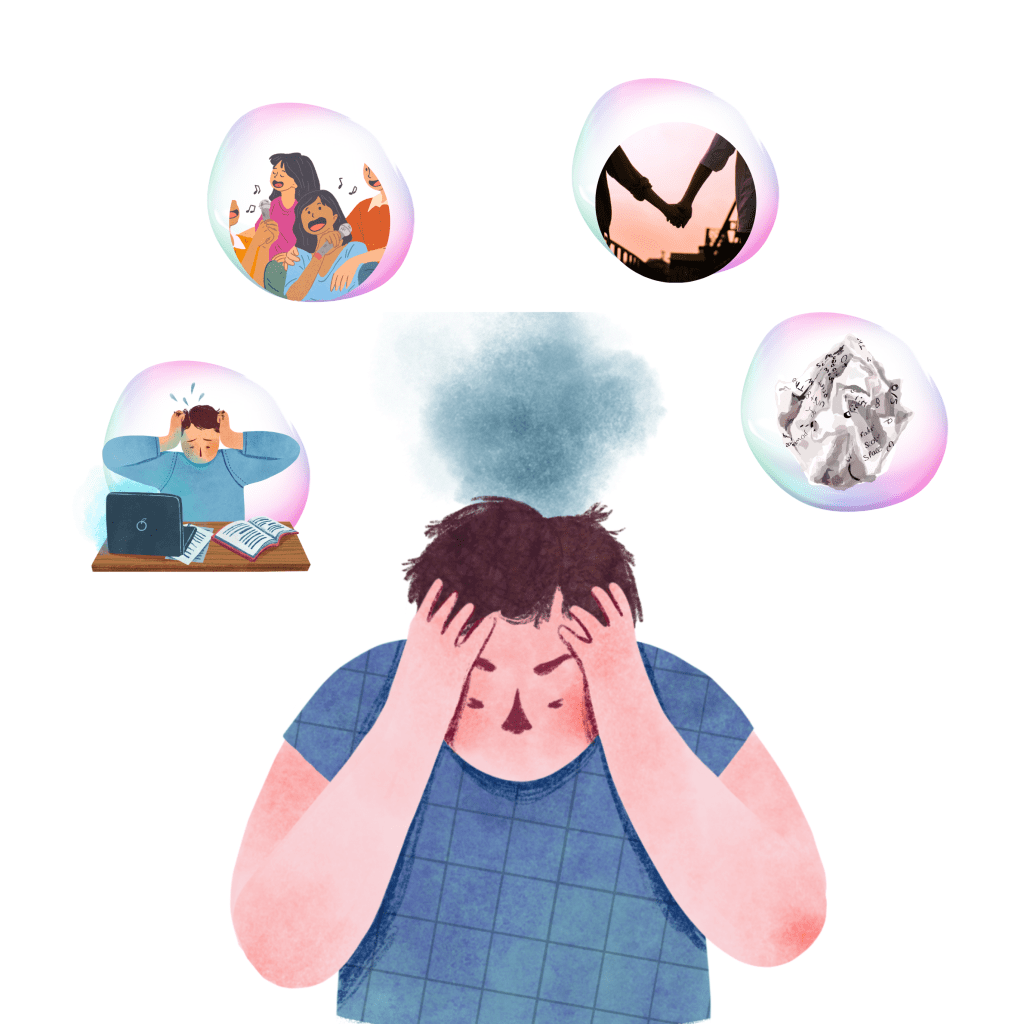
Stoicism is a philosophical study that integrates the art of self-control with philosophy, and also its application is still relevant today. Some items are the main focus of this study, from which we can learn and even improve ourselves. Here’s the list :
- Concentrate on what we can control
- Don’t do things only to impress others
- Anticipate the worst-case scenario
- Stop labelling yourself
- Accept that reality as it is
Let’s get into the details now…⏭️
I. Concentrate on What We Can Control

Don’t waste time procrastinating. This study teaches us to focus our attention on ourselves, but this does not imply that we should act selfishly. Alternatively, we can use self-care and self-love to reduce the chain of temptations and fight off negative thoughts.
Acknowledge that plenty of things that make people unhappy start within ourselves. We frequently use our imagination to prevent us from reaching our desired results. We are worried about major events that will “probably” happen if certain actions are taken.
Everyone’s greatest asset is time, and we don’t have much time to waste on pointless things. We are frequently indecisive and hesitant to take the next step, and we look for many excuses for this. Why do we continuously look for reasons to justify our actions? Because we believe that we can predict what results or responses we will get or feel when we finish what we should have done. For that purpose, make the most of your time by pursuing your goals and exploring solutions to problems you can solve.
Remember that we don’t have to adapt to unrealistic expectations or external pressures and don’t need achievements to build a reputation. The essential thing is to live your life to the fullest extent possible.
II. Don’t Do Things Only to Impress Others

Don’t be afraid of being ignored and rejected.
Everyone has their level of expectations, beliefs, and lifestyles. As a result, it will be completely natural for you to do things that others will find stupid or absurd. We frequently compare our lives and others, between what we have and what others have, what we have and what we should have, etc. If you were better, would this comparison make you happy?
Consider some of the following questions:
- How much money do we not have to spend on things we don’t need to impress other people we don’t care about or don’t mean anything to us?
- Do you pursue a career or style of life just to make yourself look special and spectacular from the perspective of others?
- Do you ever feel that you’ve sorted out many things and have answers to many of life’s problems?
- Have you made the best decision for yourself?
Know that the information you receive today might help you solve a future problem, but that information is also a double-edged sword. It also has the potential to weaken your intuition and sharpness. Because there will always be new things or insights that we can learn as long as we live, we must keep learning and hunger for knowledge.
Don’t sacrifice and sell your life for a low price to lose your freedom and happiness!
III. Anticipate the Worst Case Scenarios
This may appear contradictory to the first principle, but I want to highlight the importance of preparing ourselves with a sober mind or acting appropriately. If you have made prior precautions, you will be able to respond to each scenario with more control and confidence even though you experienced unpleasant things. This increases the probability of something unpleasant not occurring. When preparing something, ask yourself, “What could go wrong if I do this?” or “How can I deal with that?”
Unexpected failure can cause trauma and serious wounds in those affected. In addition, recovery times are usually longer. Whatever decision you make today, this minute, or this moment, you will be held accountable for it at some point.
IV. Don’t Tie and Label Yourself to 1 Identity
We’ve all probably heard or perhaps labeled ourselves, “I have difficulty remembering people’s names.” “Math isn’t my area of expertise.” “I have a bad sense of direction,” and so on. When we try to build a new routine and link ourselves to one identity or an event, we will get depressed and confused when the ‘label’ that we usually use to define ourselves no longer exists.

Also, when someone devotes all of their attention or focus to one thing, or when they experience despair due to something that matters to them, it usually will silence, obscure, and blocks possible alternatives. Of course, this will make it more difficult for us to identify the problems openly.
We also frequently see a problem from a single point of view, usually our understanding and perspective. When you notice this later, you’ll see that your feelings, perceptions, and attitudes differ. When you throw words at each other to express your emotions and thoughts instead of listening to each other, the problem will worsen, and you will hurt each other. When unsure how to act, we can pretend the problem we face has happened to someone close to us and consider what we could do, say, or do to cheer that person up.
V. Accept That Reality As It Is

You can’t control everything, so don’t try to deny what happens to you. You can only control yourself and decide the best strategy; rather than regretting and repenting what has occurred, it is better if we all focus on what we can do in the future to improve ourselves continually. The sooner you give it your all, the less likely you will come to regret your decisions.
We need to learn to listen more to develop ourselves. Since we have two ears and one mouth, we should practice listening more and talking less.
Conclusion
Things will never go as smoothly as we want. The world will always try to define and categorize our life. We will continue to face many challenges as long as we are alive, and we may even feel trapped into believing there is no way out. We often assume that the problems we confront are more serious than they are, and frequently we think that others do not understand our suffering.
We have to be real; You don’t have to lie to yourself; we don’t always want to hear about other people’s difficulties since we are dealing with our issues. This knowledge was generated and written with the sole purpose of assisting us in getting the most out of our life while maximizing positive emotions and minimizing negative ones.
Don’t look for happiness in achievement, power, money, or a perfect academic score; material goods exist to serve you, not to define you. To live a successful life, we don’t need luxuries; instead, we should practice gratitude.
Happiness is within us; let us improve our thoughts, acts, and words to improve our life satisfaction. According to Stoic beliefs, there are four primary virtues:
- Wisdom
- Temperance
- Justice
- Brave
These four virtues mentioned that to be happy, we must have the ability to solve problems with wisdom and understanding, self-control, treat people fairly, and face challenges with integrity.
Put in another way, putting morality and self-control into practice can positively impact others and our responses. Don’t keep looking back; what happened in the past can’t be changed, but we can work to improve the future. This information also can be linked to the Buddhist concepts of peace of mind and nirvana in modern teachings, and the contemporary psychology notion is known as REBT (Rational, Emotive, Behavioral Therapy).
Thats all for this month. see you in the next content!
References
- https://www.youtube.com/watch?v=R9OCA6UFE-0
- https://nationalgeographic.grid.id/read/133097073/menerapkan-stoikisme-demi-hilangkan-stres-menjalani-kehidupan?page=all
- https://www.merdeka.com/sumut/mengenal-stoikisme-filsafat-hidup-bijak-dan-bahagia-untuk-mengatasi-zaman-modern-kln.html
- https://dailystoic.com/what-is-stoicism-a-definition-3-stoic-exercises-to-get-you-started/
- https://www.idntimes.com/life/inspiration/khumairoh-2o4ioio27/prinsip-stoikisme-bikin-hidupmu-tenang-c1c2/4
- https://www.holstee.com/blogs/mindful-matter/stoicism-101-everything-you-wanted-to-know-about-stoicism-stoic-philosophy-and-the-stoics


Leave a comment